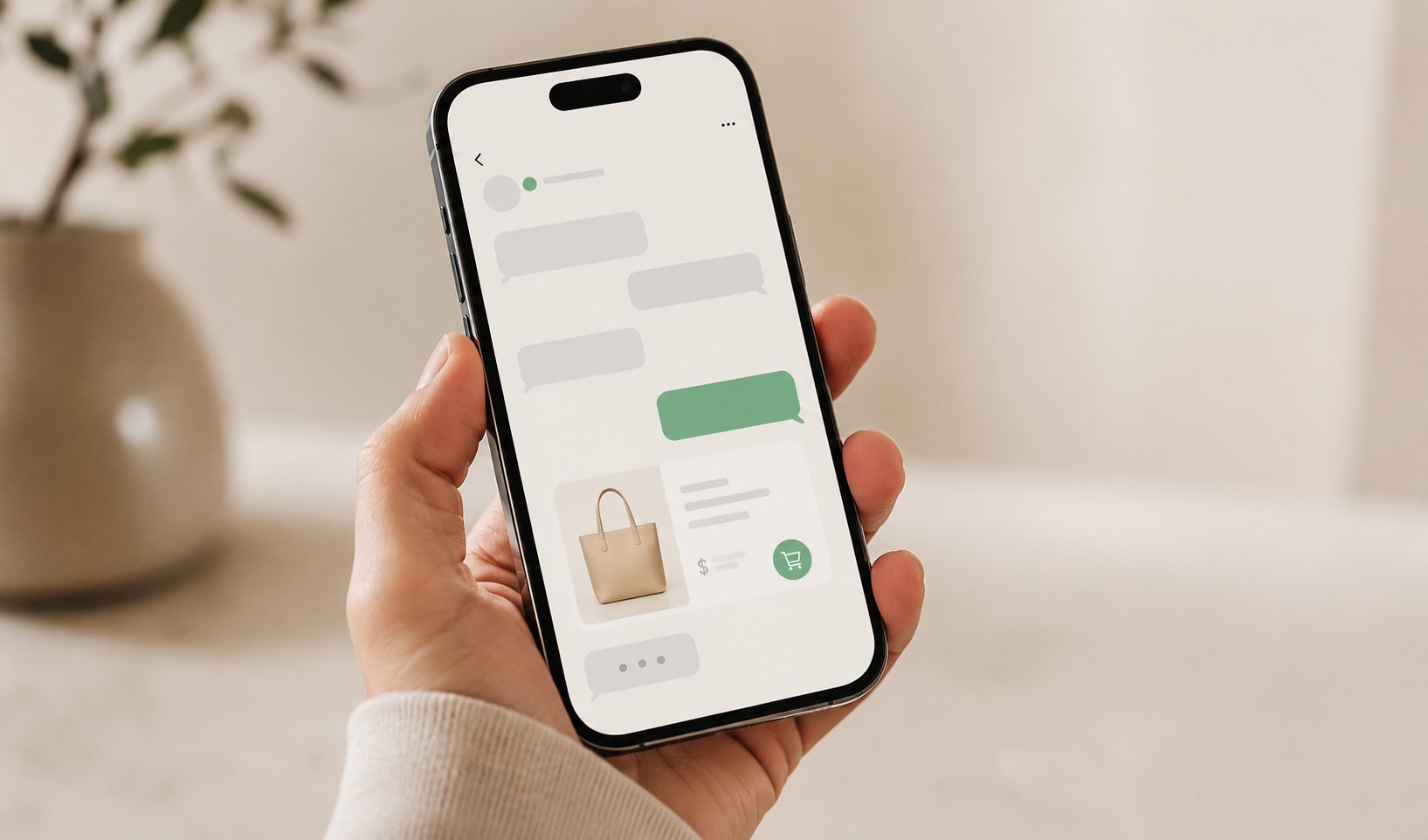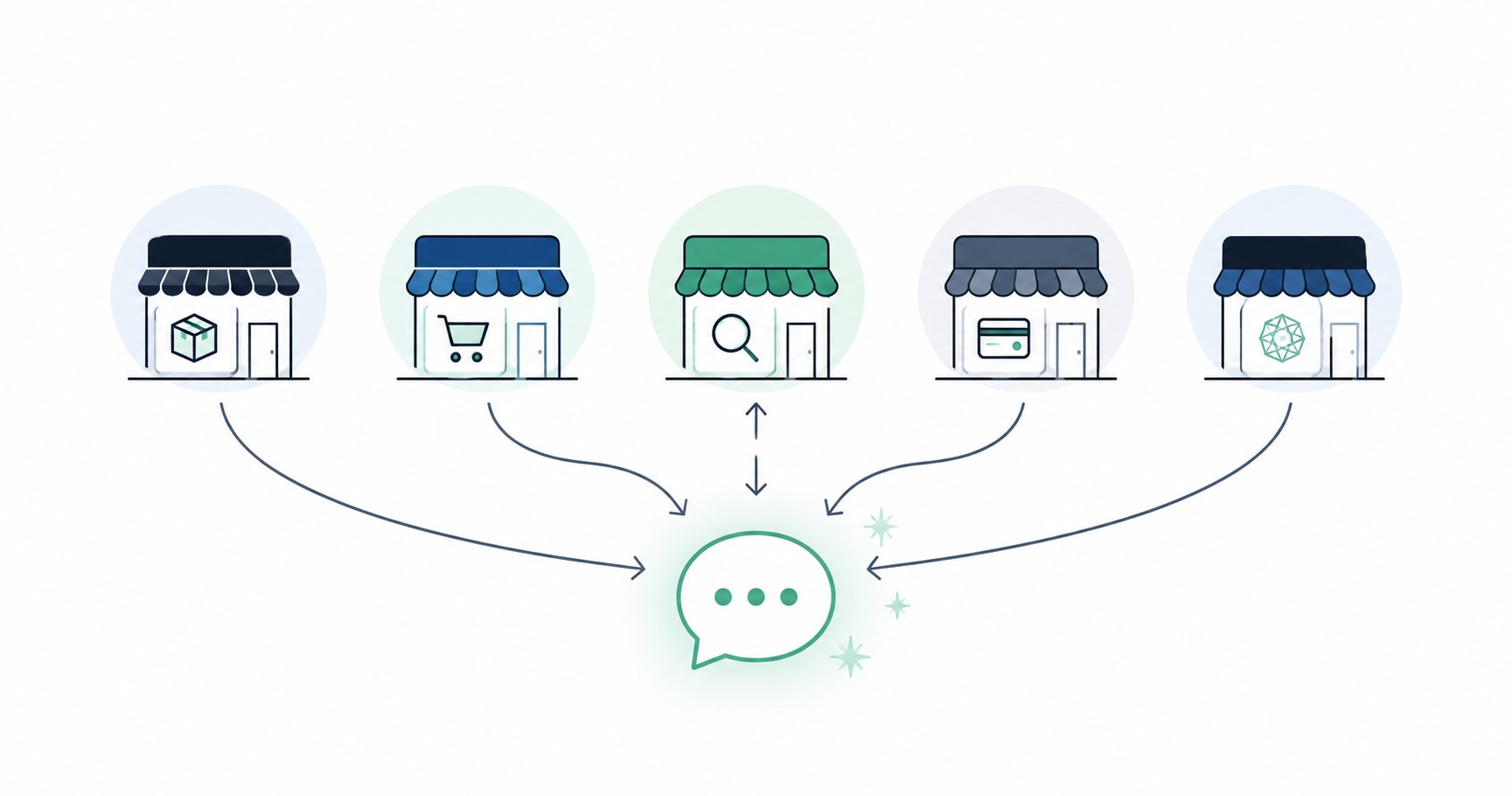
In the space of a few months, nearly every major shopping platform launched the same kind of product: an AI that talks to shoppers instead of making them search, filter, and click through pages alone.
Amazon merged Rufus into Alexa. Walmart launched Sparky. Google rolled AI Mode into Shopping. Klarna added an AI shopping assistant to its checkout flow. Perplexity built agentic checkout directly into search results.
That's not a coincidence. That's an industry admitting something out loud: the search bar was never the endpoint. It was always a workaround for the thing every physical store already had — someone there to help you decide.
The pattern behind the headlines
Each of these launches looks different on the surface — one is voice, one is chat, one is embedded in checkout, one is baked into search. But they all solve the exact same problem: a shopper lands on a page, doesn't find what they need fast enough, and leaves without saying a word.
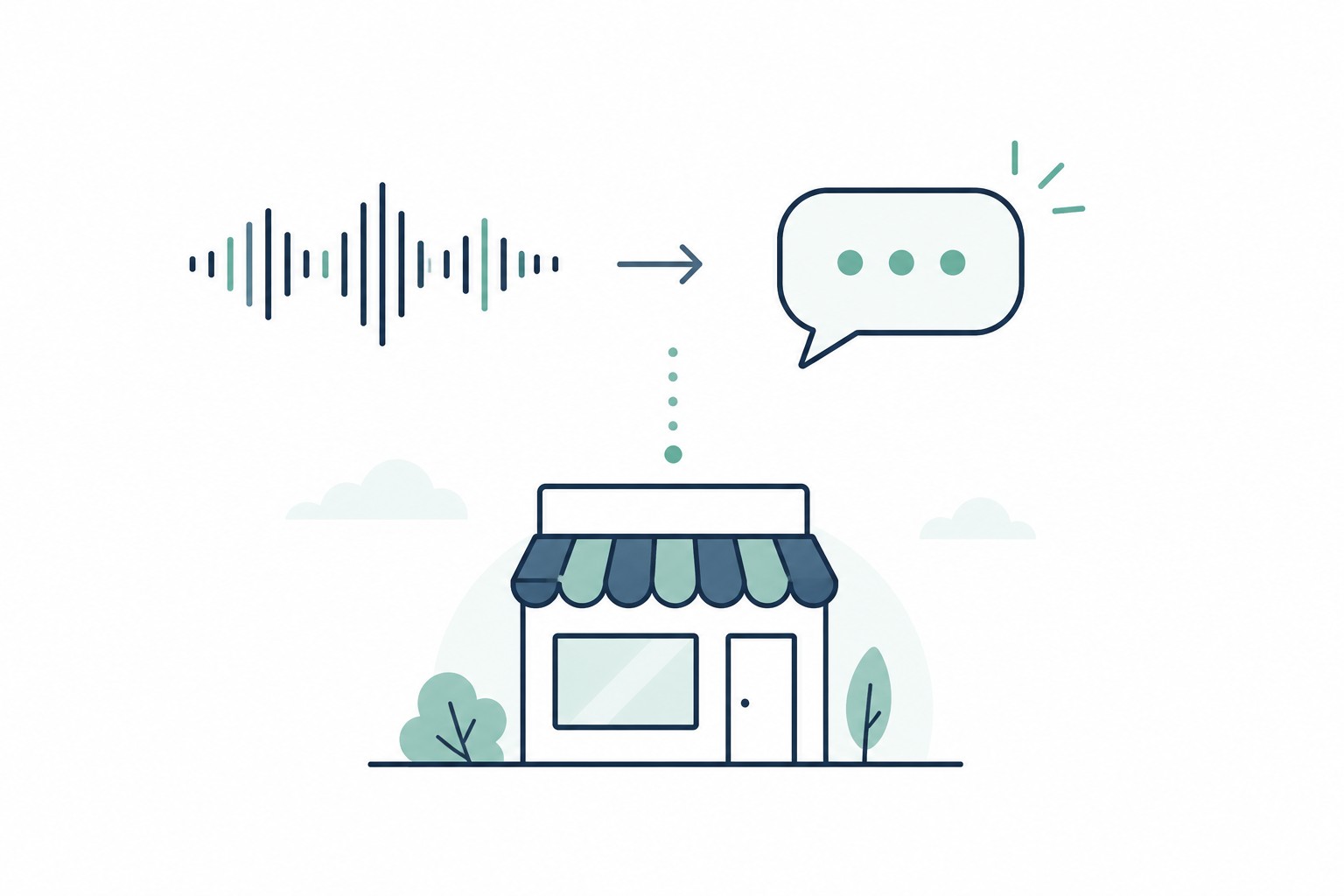
The industry has a name for this now — silent commerce. No complaint, no support ticket, no signal. Just a visitor who arrives, hesitates, and disappears. Every one of the launches above is a bet that ending silent commerce is worth billions.
Amazon: the numbers that started the race
Amazon's Rufus is the most publicly documented case. Amazon has reported that shoppers using Rufus were meaningfully more likely to complete a purchase, and that the assistant drove billions of dollars in incremental annualized sales. During Black Friday, sessions with Rufus converted at a rate several times higher than sessions without it.
In 2026, Amazon folded Rufus into Alexa, creating a single shopping assistant that follows the customer from phone to browser to Echo device. The message was clear: shopping is becoming one continuous conversation, not a series of disconnected searches.
Walmart, Google, Klarna, Perplexity: same bet, different door
Walmart's Sparky brings the same conversational logic to its own app and site — understand the need, narrow it down, recommend, and check out, instead of making the shopper filter through categories alone.
Google folded AI Mode into Shopping, letting people describe what they want in plain language instead of stacking filters. Klarna added an AI assistant directly into its checkout and app experience, guiding shoppers through decisions at the exact moment they're about to pay. Perplexity went further and built agentic checkout into its search results — letting an AI complete the purchase on the shopper's behalf.
None of these companies compete with each other for market share in the traditional sense. But they've all reached the same conclusion at the same time: the shopper doesn't want to search. They want to talk to someone who understands what they need.
The part nobody's talking about
Every one of these assistants was built by a company with a data science team, a shopping graph, and years of behavioral data. Rufus didn't happen because Amazon got lucky — it happened because Amazon had the infrastructure only a handful of companies on Earth can afford to build.
That leaves millions of independent stores exactly where they started. Same empty storefront. Same silent visitors. Same search bar standing in for a salesperson who was never there. The technology that ends silent commerce exists — it's just locked behind the resources of a few giants.
SellerTwin brings the same shift to independent stores
SellerTwin is built on the same mechanism Amazon, Walmart, Google, Klarna, and Perplexity are all betting on — presence and real-time conversation, instead of a search bar and a grid of products. The difference is who it's built for.
Any Shopify or independent store can add a voice-and-text AI salesperson to their site in minutes — no data science team, no shopping graph, no nine-figure R&D budget. The same shift that's reshaping Amazon and Walmart is now available to the store that's never had a salesperson at all.
The giants proved the mechanism works. The question was always who would bring it to everyone else.