Every major retailer has now bet on the same idea: a shopper who can ask a question in plain language, rather than dig through a search bar, converts more often. Amazon proved it at a scale nobody can dispute. But "AI shopping assistant" now covers a wide range of very different tools — some built for enterprise retailers, some for Shopify stores specifically, some for support tickets rather than sales. This guide breaks down the real options by what they're actually built for, so you can pick based on your store's biggest gap rather than a generic feature list.
What Actually Separates a Good AI Shopping Assistant
Before comparing tools, it helps to know what to look for:
Real catalog integration. An assistant that answers from your actual product data (stock, price, variants) rather than a static script.
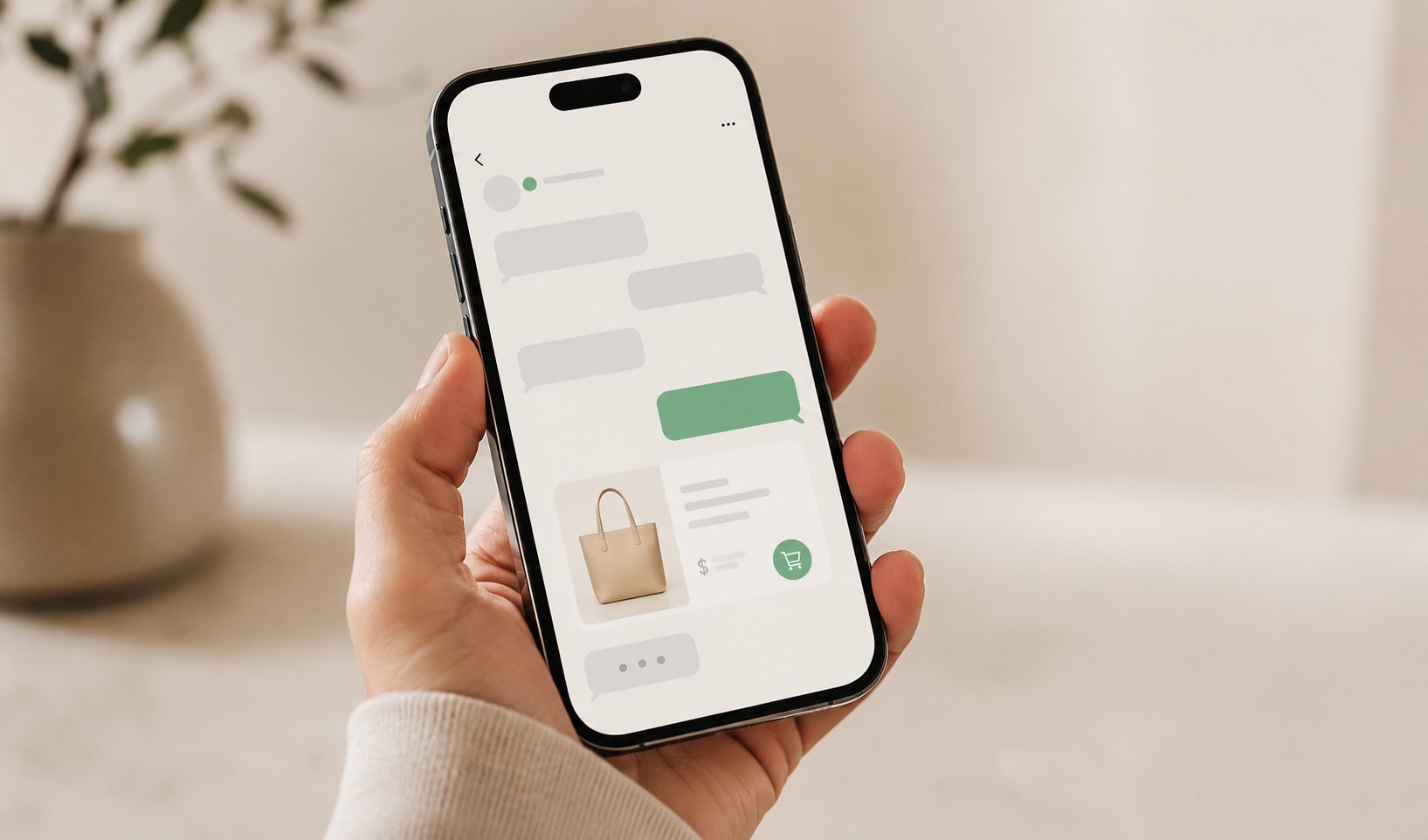
Where it lives. Some are consumer-facing apps a shopper opens separately (like Amazon's own assistant); others are embedded directly on your storefront, which is what actually helps your conversion rate.
What it's optimized for. Sales (guiding a purchase decision), support (resolving tickets), or both.
Whether it gives you, the merchant, anything back. Some tools only serve the shopper. The stronger ones surface what shoppers are actually asking and struggling with, so you can fix the underlying problem.
The Options, by Category
Amazon's Rufus / Alexa for Shopping — the proof of concept
Amazon's own assistant, now folded into Alexa for Shopping as of May 2026, is the clearest evidence that conversational shopping works at scale — hundreds of millions of shoppers already use it. But it's a consumer-facing tool inside Amazon's own app and site. It isn't something an independent store can deploy. Its relevance to a merchant isn't as a tool to install — it's a signal of where shopping is heading.
Shop.app — Shopify's own discovery layer
Shopify's Shop.app gives shoppers a conversational way to browse across Shopify merchant catalogs. It helps with discovery at the platform level, but like Rufus, it's a consumer-facing app layer, not something embedded directly into a single store's own product pages and checkout flow.
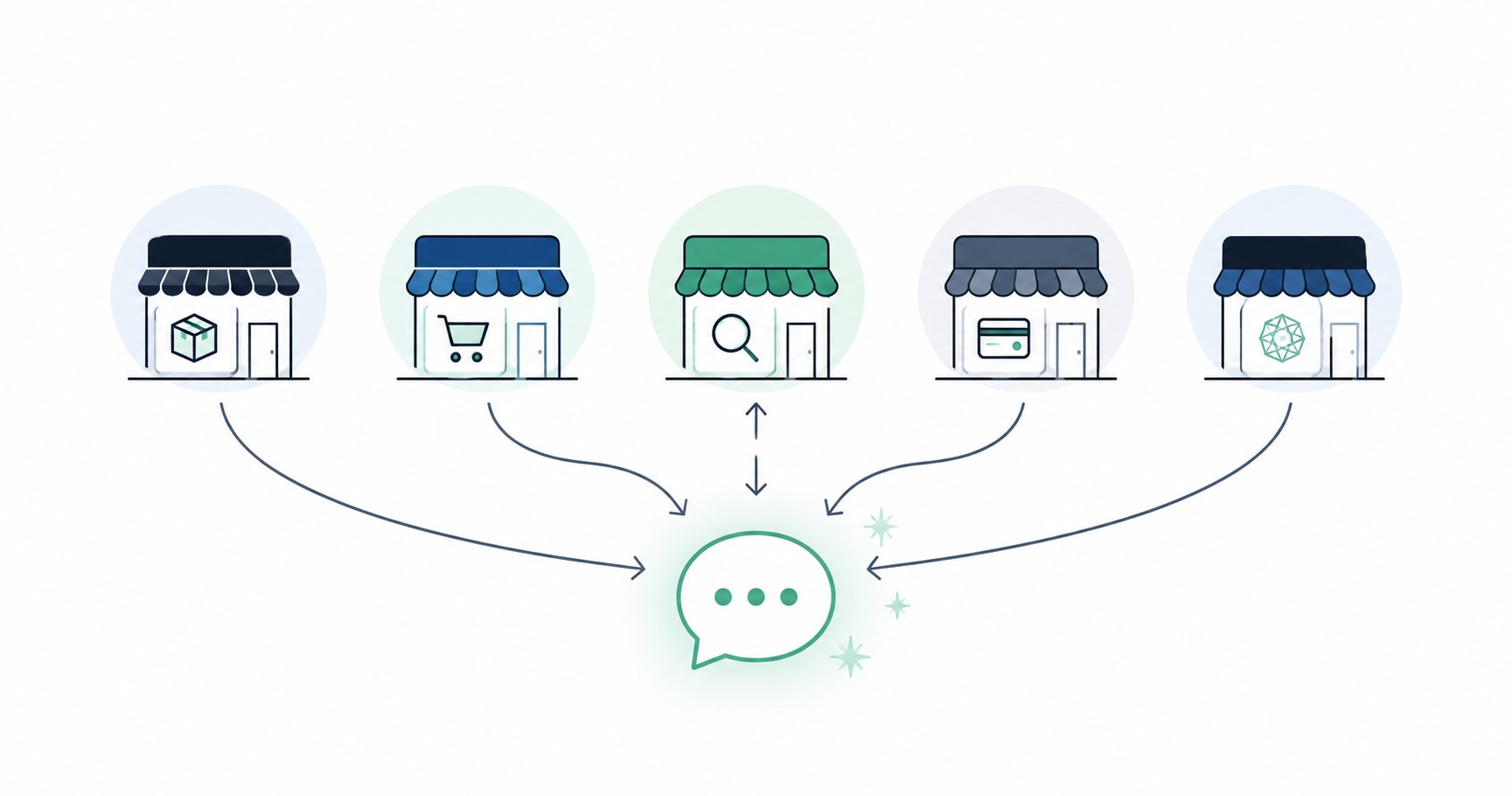
Support-first tools (Gorgias, Tidio/Lyro, Klaviyo Customer Agent)
These started as customer service or marketing platforms and have added shopping-assistant features on top — answering product questions, handling order status, and in some cases recommending products. Klaviyo's Customer Agent, for instance, works across web chat, SMS, and email, and ties into Klaviyo's existing customer data for personalization — but like the others in this group, it's text-only. They're a solid fit if your main pain point is support ticket volume, less so if your priority is guiding an undecided shopper toward a purchase decision in the moment, or if voice matters to your shoppers.
Behavioral / sales-first tools (Rep AI, Angle, Tolstoy AI Shopper)
Built specifically for Shopify, these focus on triggering engagement at the right moment — a shopper hesitating on a product page, browsing without converting — and nudging them toward checkout. Strong for conversion-focused use cases, mostly text-based, and generally built around chat rather than voice.
SellerTwin — voice-first, with visibility built in
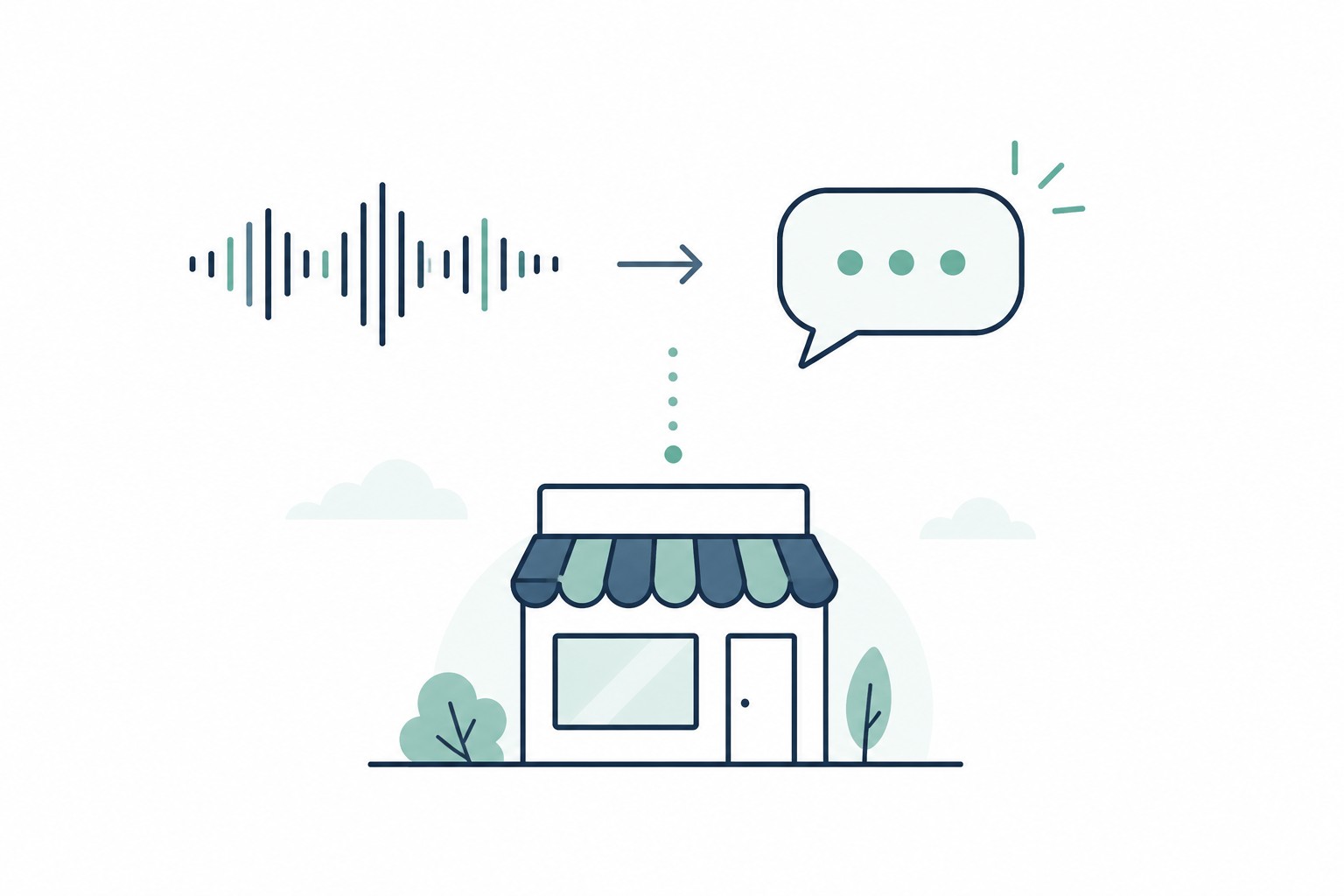
Where SellerTwin differs from most of the above: it's built specifically for small and independent Shopify stores, it supports full voice conversation (not just chat — a shopper can simply talk, closer to what Amazon just made the default for its own store), and it separates two distinct conversion moments — discovery selling (guiding an undecided browser) and rescued selling (resolving a specific doubt on a product page) — rather than treating every interaction the same way.
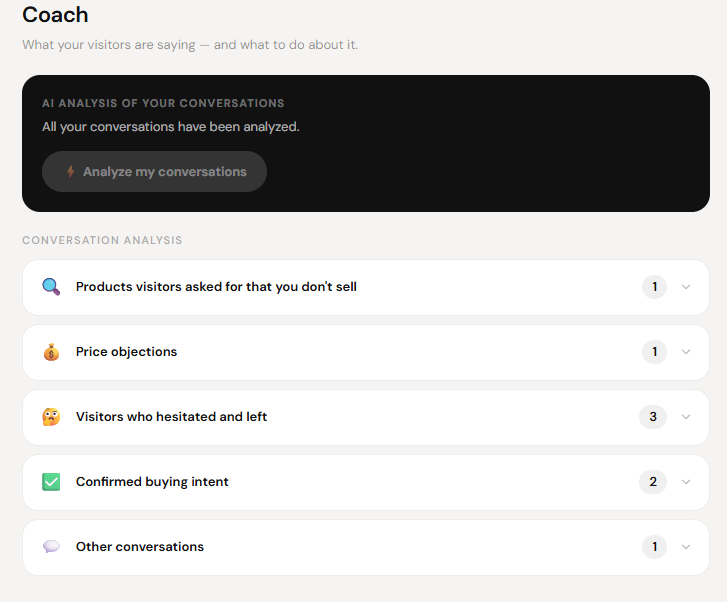
The part most tools in this category don't offer: Coach Mode, which reads every conversation and reports back the objections and confusions that keep coming up, so a merchant fixes the actual leak instead of guessing from a bounce rate. Most assistants help the shopper. Fewer help the merchant understand why shoppers hesitate in the first place.
See how it works on your store →
Which One Fits Your Store
There's no single "best" — it depends on the actual gap in your funnel:
Losing sales to unanswered pre-purchase questions? A sales-first, catalog-integrated assistant embedded directly on your storefront — this is where SellerTwin, Rep AI, and Angle compete.
Drowning in repetitive support tickets? A support-first tool like Gorgias or Tidio will resolve more of that volume.
Want voice, not just chat? This narrows the field significantly — most tools in this category are still chat-only.
Want visibility into why shoppers leave, not just that they left? Check whether the tool reports recurring objections back to you, rather than only handling the shopper's side of the conversation.
Your store could have a salesperson too. Create yours free →