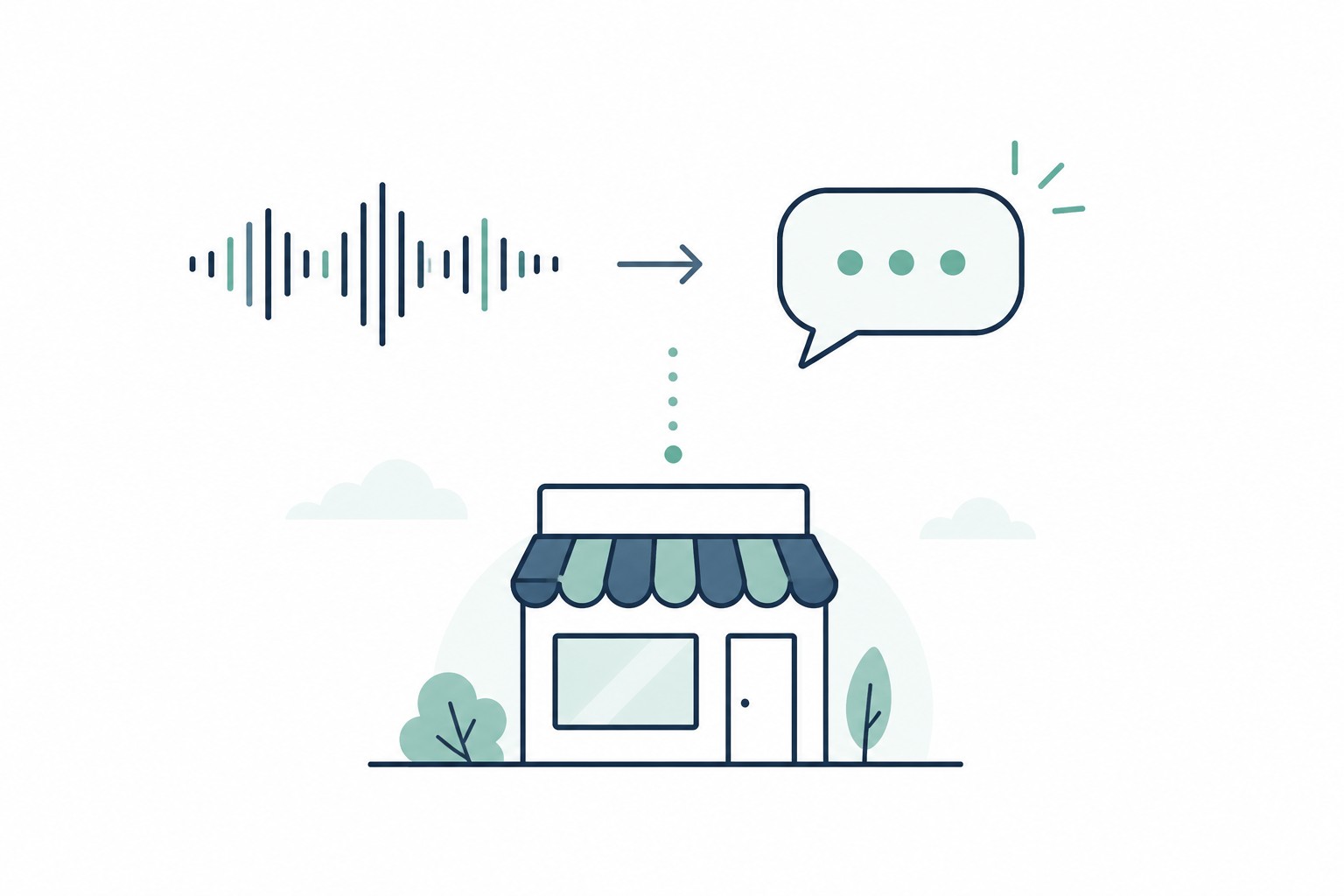
Every online store faces the same silent problem: a visitor lands on a page, has a question, doesn't find the answer fast enough, and leaves without saying a word. Conversational commerce is the umbrella term for the shift fixing that — replacing static pages and search bars with real, back-and-forth conversation as the way people shop.
This guide covers what the term means, where it came from, how it actually works, and how it applies to independent stores today.
What Conversational Commerce Actually Means
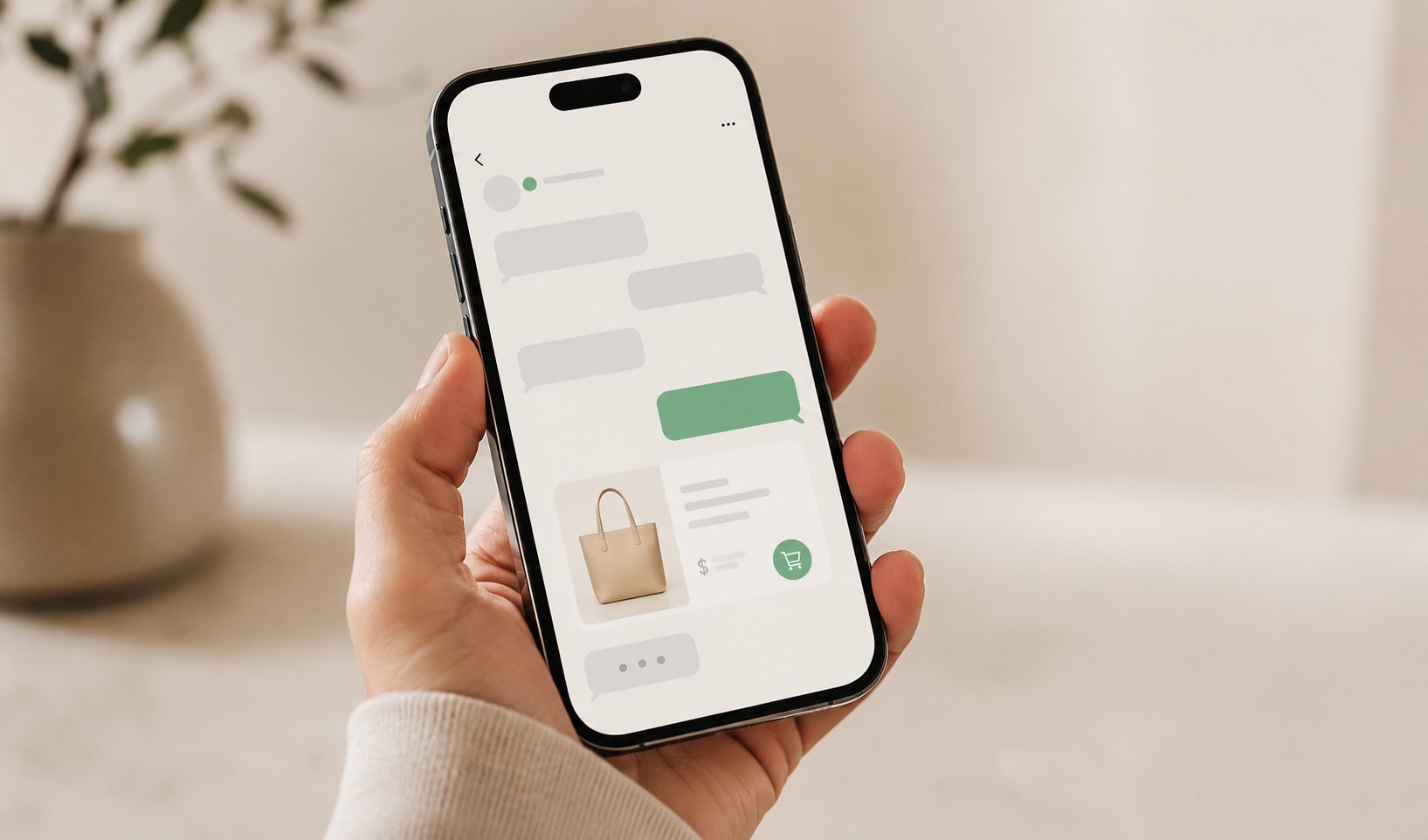
Conversational commerce is any shopping experience built around a two-way conversation — text or voice — rather than browsing, filtering, and searching alone. Instead of a shopper hunting through categories and product pages to find what they need, they simply ask, and something (a chatbot, a voice assistant, or a full AI salesperson) answers, recommends, and guides them toward a purchase.
The term covers a wide spectrum: a basic FAQ chatbot on a website, a WhatsApp order line, a voice assistant on a smart speaker, and a full AI-powered shopping assistant that holds a natural conversation about a store's entire catalog are all forms of conversational commerce. What separates them is depth — how much they actually understand and how close they get to replicating a real salesperson.
Where the Term Comes From
The phrase was popularized around 2015-2016, as messaging apps like Facebook Messenger and WhatsApp started adding business and shopping features, and brands began experimenting with chatbots inside those apps. The early version was mostly rules-based: pick an option, follow a scripted flow, get a canned response.
That early wave largely disappointed. Rules-based bots broke the moment a shopper phrased something unexpectedly, and most conversations dead-ended in frustration rather than a sale. Conversational commerce as a term went quiet for a few years — not because the idea was wrong, but because the technology behind it wasn't good enough yet.
Why It's Back — and Different This Time
What changed is the AI underneath. Large language models can now hold a genuinely open-ended conversation, understand context across multiple turns, and stay grounded in a store's actual product catalog instead of a fixed script. That's the difference between a 2016 chatbot that broke on the second question and a modern AI shopping assistant that can handle an objection, compare two products, and recommend a third the shopper hadn't thought of.
Amazon's Rufus is the clearest large-scale proof this works: see the numbers behind it. And Amazon isn't alone — most major shopping platforms have launched some form of conversational AI within months of each other, which is a strong signal the category is maturing, not fading again.
How It Actually Works
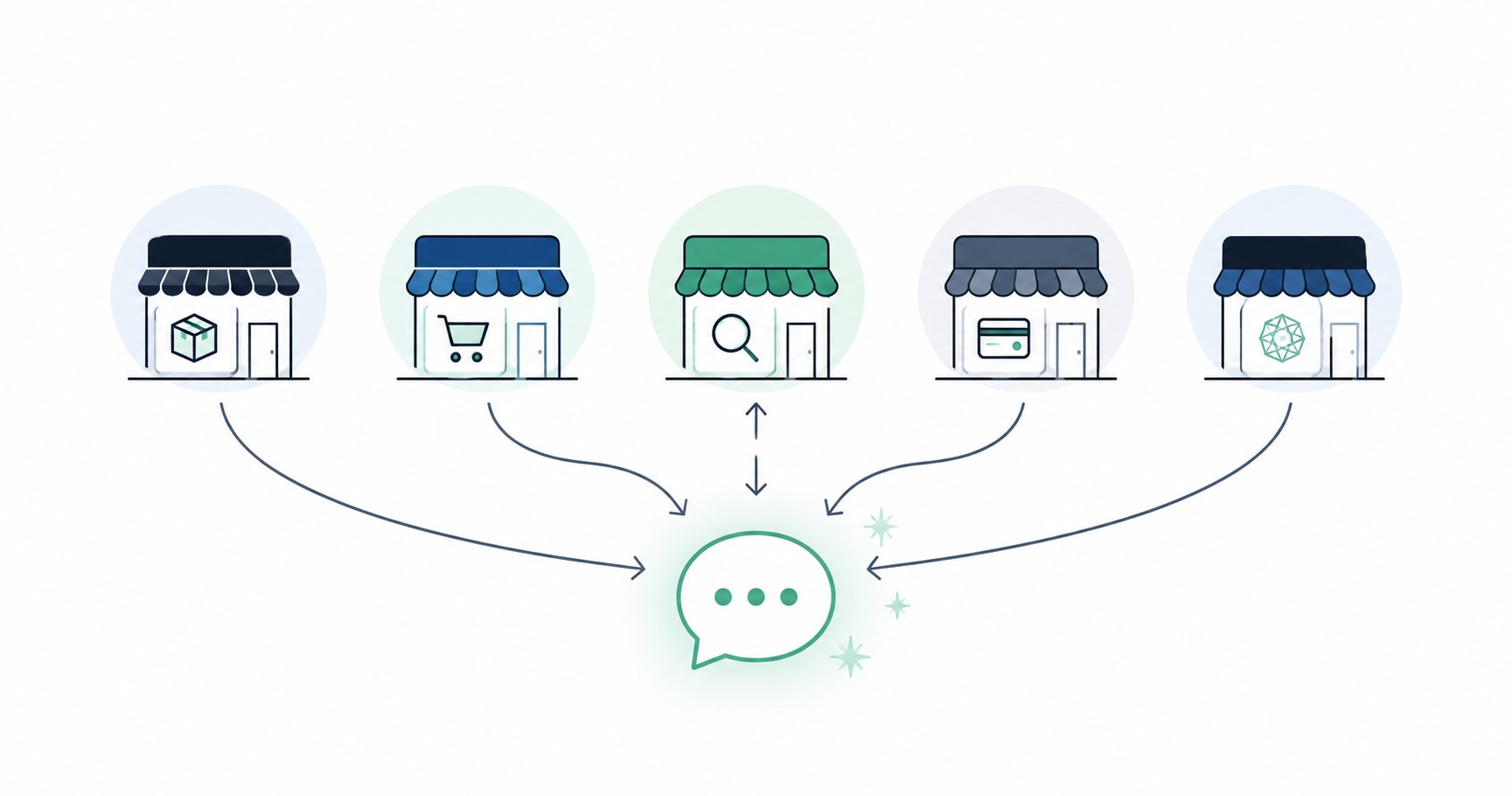
At a basic level, conversational commerce combines three things:
Natural language understanding — interpreting what a shopper actually means, not just matching keywords.
Product knowledge — grounding the conversation in a store's real catalog (prices, stock, descriptions), so recommendations are accurate rather than generic.
A response channel — text chat, voice, or both, delivered wherever the shopper already is: a website widget, a messaging app, or a standalone link.
The more advanced implementations add memory (recalling earlier parts of the conversation), personality (matching a brand's tone), and the ability to guide a shopper all the way to checkout rather than just answering questions.
Conversational Commerce vs. AI Shopping Assistants
The two terms overlap heavily but aren't identical. Conversational commerce is the broader category — any conversation-based shopping experience, including basic chatbots and messaging-app order lines. An AI shopping assistant is a specific, more advanced implementation of that idea: an AI-powered assistant embedded in a store that understands the catalog and can carry a full sales conversation, not just answer FAQs. Read the full breakdown of what an AI shopping assistant is and how to add one to a Shopify store →
In short: every AI shopping assistant is a form of conversational commerce, but not every conversational commerce tool is a full AI shopping assistant.
Why It Matters for Independent Stores
Large retailers have been building conversational commerce into their own platforms for years — the infrastructure is expensive, and until recently it was out of reach for anyone without a dedicated data team. That's changing. The same mechanism now runs as a plug-in widget or a single link, deployable on a Shopify store or any independent site in minutes.
For a small or solo-run store, that means the same tool a visitor might expect from a giant retailer — someone there to answer a question instead of leaving them to figure it out alone — is no longer reserved for companies with nine-figure budgets. That's what SellerTwin brings to independent stores: a voice-and-text AI salesperson that plugs into a Shopify or independent site in minutes, built on the same conversational mechanism the largest platforms are now betting on.
The Bottom Line
Conversational commerce isn't a new idea — it's an old idea (a salesperson who talks to you) that finally has the technology to work at scale, on any store, not just the biggest ones. The term describes the shift; what a store actually gets from it depends on how advanced the implementation is.
Your store could have that conversation too — with SellerTwin.