Someone lands on your store from an ad. They look around for ten seconds. They don't see what they're looking for fast enough, and they leave. No message, no complaint, nothing in your inbox. You don't even know they were there.
This happens on the vast majority of e-commerce visits. Industry data consistently shows that around 70% of visitors leave without buying anything. The usual advice is to optimize the funnel — better photos, a faster checkout, a brighter button. All useful. None of it addresses the actual gap: there's no one there to answer the one question that would have closed the sale.
That gap has a name now. It's called an AI shopping assistant.
What Is an AI Shopping Assistant
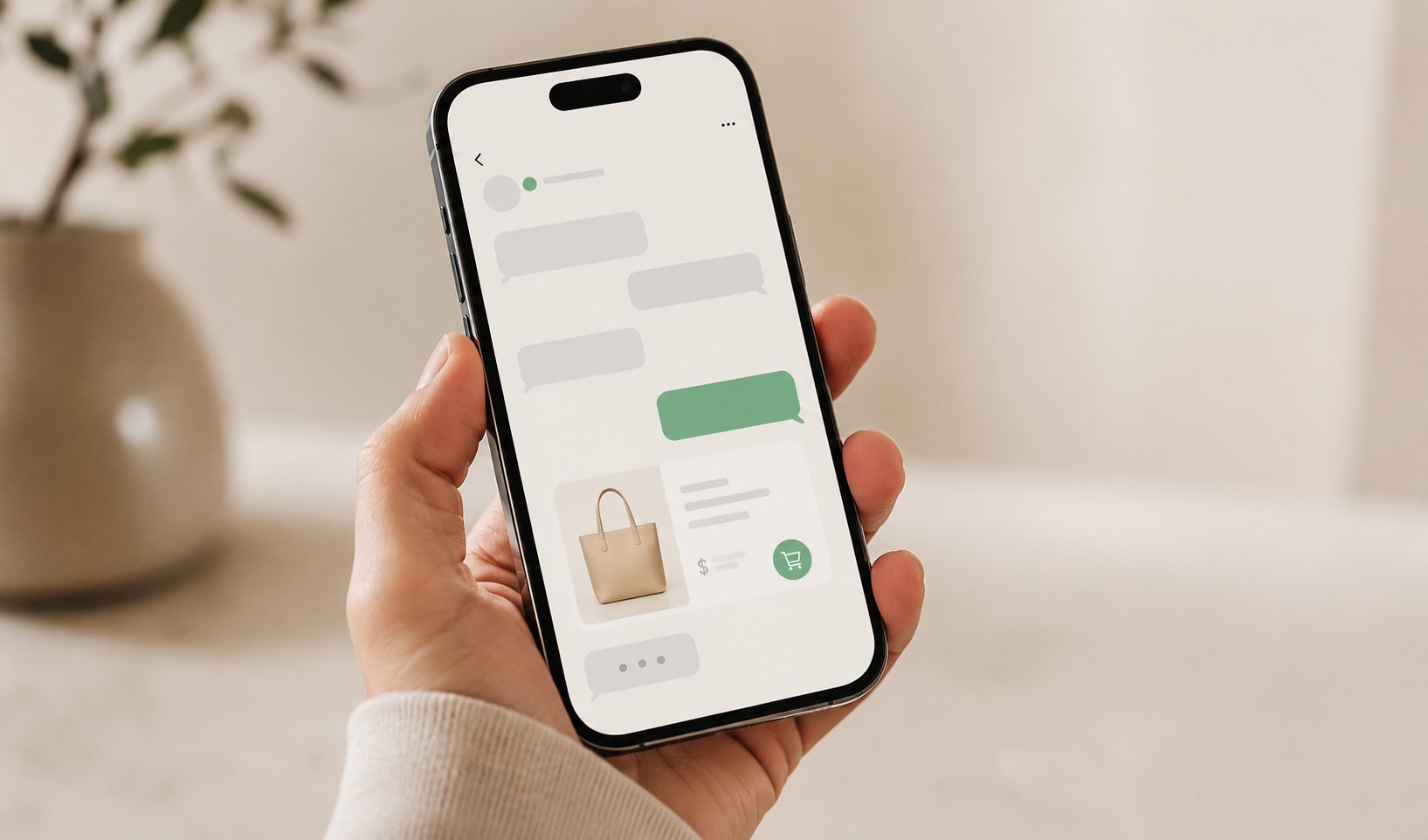
An AI shopping assistant is software that lets a shopper describe what they want in plain language, and get a real answer — not a list of filters to click through. Instead of typing keywords into a search bar and hoping the results match, the shopper says something like "I have sensitive skin and want a fragrance-free moisturizer," and the assistant interprets the request, asks a follow-up if needed, and recommends specific products from the catalog.
The model that proved this works at scale is Amazon's Rufus. Over 300 million customers used it in 2025 alone, with active users up 115% and engagement up 400% year over year — and Amazon's own data shows shoppers who use it during a session are over 60% more likely to complete a purchase on that visit. The signal was strong enough that in May 2026, Amazon folded Rufus into a unified assistant, Alexa for Shopping, making conversation the default shopping interface across its entire store rather than an optional feature. Walmart followed with its own assistant, Sparky. Both moves point to the same conclusion: the largest retailers in the world have decided that conversation, not navigation, is the next interface for online shopping — at a scale no independent test could have proven on its own.
The catch: that technology was built for Amazon's own marketplace, running on Amazon's own infrastructure, for Amazon's own catalog. A Shopify store has had no equivalent — until tools built specifically for independent merchants closed that gap.
How Is This Different From a Chatbot
Most stores that have an AI tool already have a chatbot, and it's worth being precise about why an AI shopping assistant is a different category.
A chatbot is reactive. It waits for a question — "What are your shipping times?" — and answers it. It's a faster FAQ page, useful for support, but it doesn't initiate, doesn't qualify the shopper's need, and doesn't try to move them toward a purchase decision.
An AI shopping assistant is proactive, closer to a salesperson than a support agent. It opens the conversation, asks what the shopper is looking for, narrows down the options, handles the objection that's actually stopping them ("is this safe for sensitive skin," "does this ship internationally"), and points to the specific product that fits. The goal isn't to answer a question. The goal is to close a sale.
How to Add One to a Shopify Store
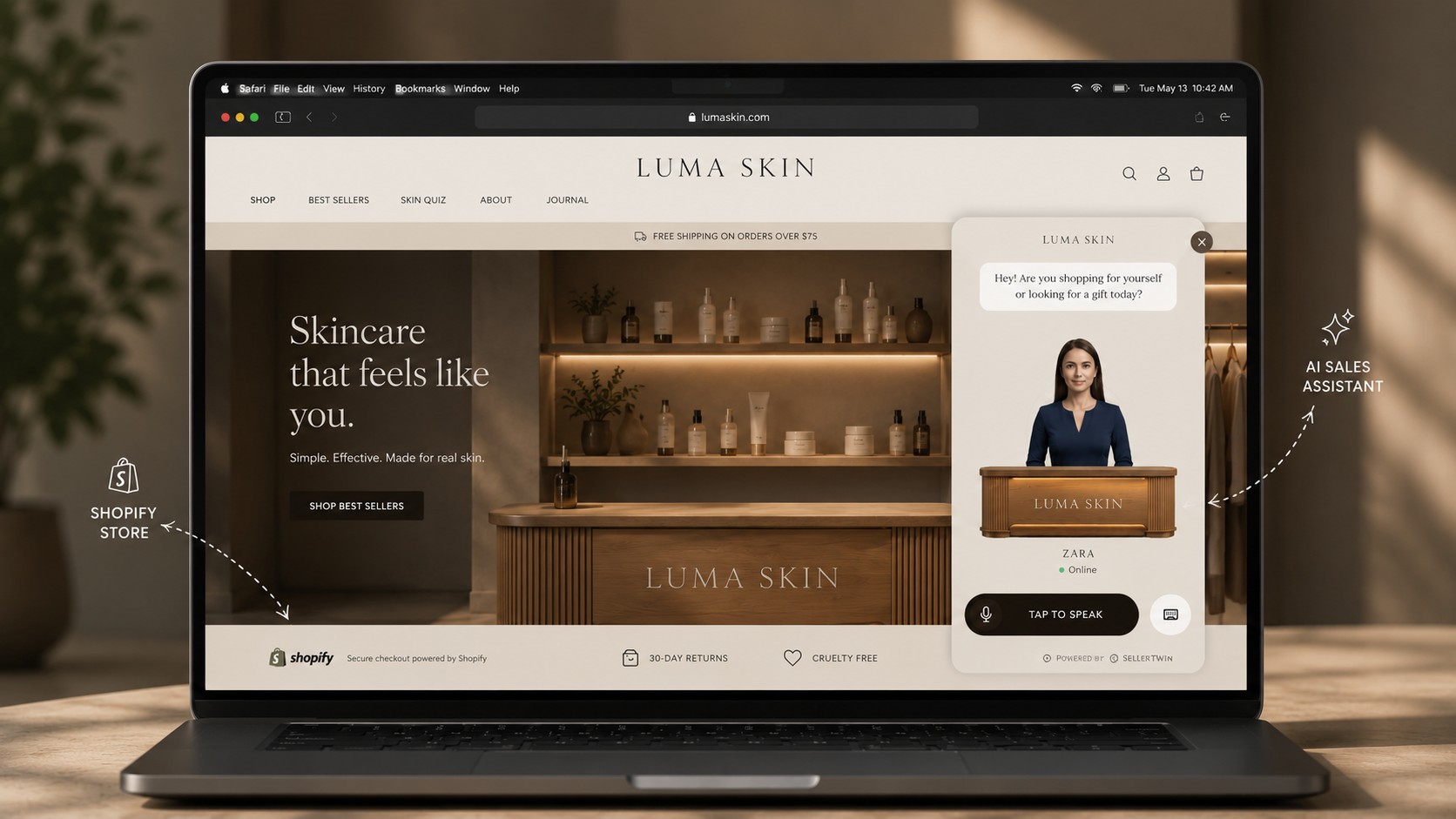
For most independent merchants, the practical question is whether this requires rebuilding the store. It doesn't.
A modern AI shopping assistant installs as a widget — one script tag added to a Shopify theme, no migration, no changes to the existing catalog, theme, or SEO setup. The assistant sits on top of the store rather than replacing any part of it, and removing it later is just as simple as adding it.
The setup itself comes down to three things. First, the product catalog — most tools support pulling products directly from Shopify, so there's no manual re-entry. Second, the personality and voice of the assistant — what it's called, how it sounds, what tone it uses, since this is meant to feel like a person, not a form. Third, the brand knowledge — the answers a real salesperson would know by heart: what makes the product different, how to handle the common objections, which products go well together.
Once that's in place, the assistant runs live on the storefront, answering visitors in real time without anyone behind the scenes.
SellerTwin Handles This End to End
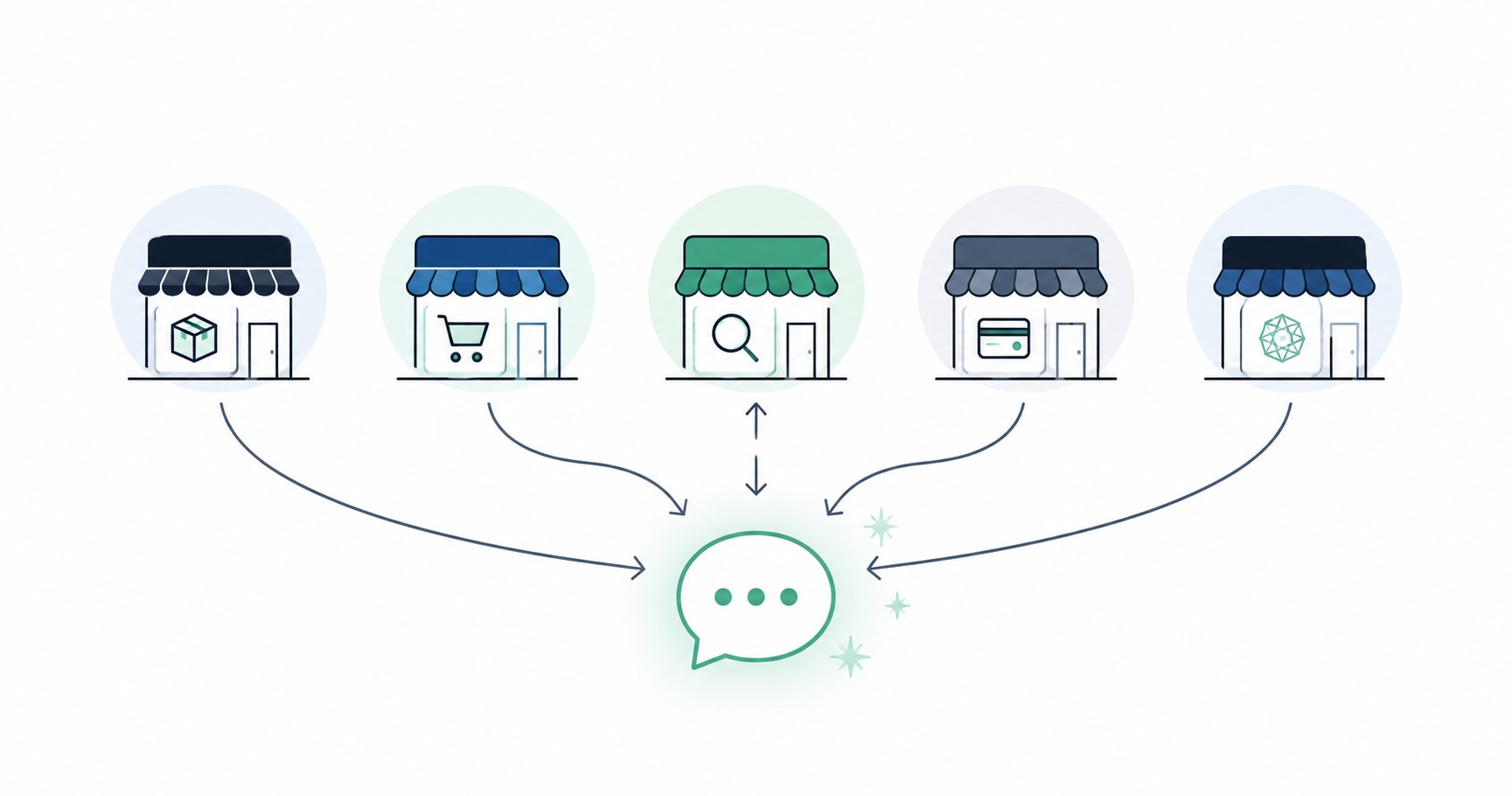
This is exactly what SellerTwin was built to do — the same idea Amazon just proved at scale, made available to any Shopify store, with capabilities most assistants (including Rufus) don't offer to the merchant themselves.
It ends silent commerce. Most Shopify stores run in silence: a visitor leaves, and nothing about the interaction gets recorded except that the session ended. SellerTwin puts a live conversation back on every product page, so your store stops losing sales to unanswered questions nobody even knew were being asked.
It handles both discovery and rescued selling. A shopper unsure what they want gets guided through your catalog like someone walking into a boutique — that's discovery selling. A shopper already deciding between two products gets the specific answer that tips them toward checkout — that's a rescued sale. SellerTwin tracks these as two distinct paths, so you can see which one your store actually depends on.
It surfaces what's actually going wrong — automatically. This is the part Rufus was never built to give you, the merchant. SellerTwin's Coach Mode reads every conversation and reports back the objections and confusions that keep coming up — a sizing chart nobody understands, a shipping question with no clear answer on the page — so you fix the actual leak instead of guessing from a bounce rate.
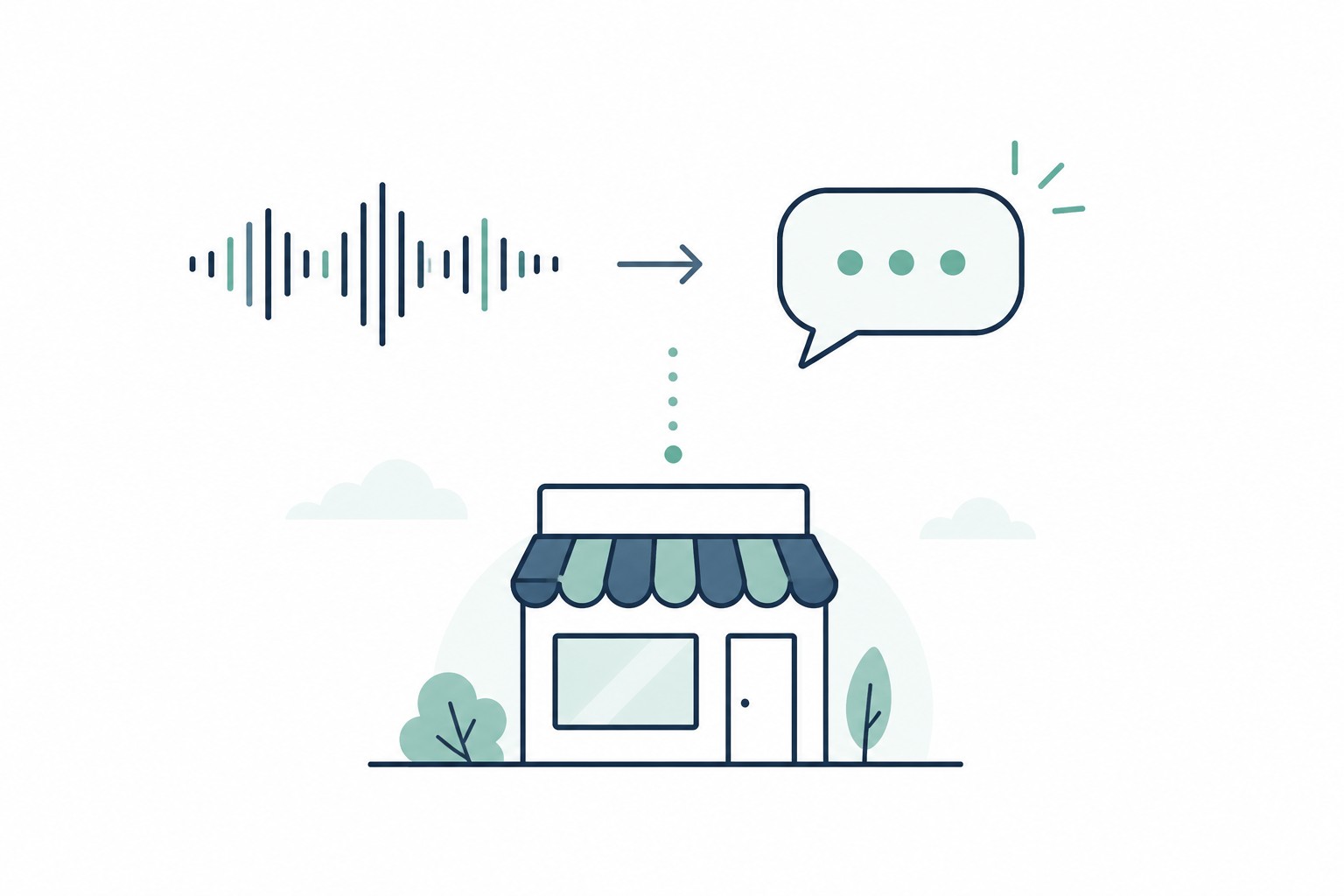
It's voice, not just text. Most AI assistants built for independent stores are chat-only. SellerTwin lets a shopper simply talk, closer to what Amazon just made the default for its own store — now available to a Shopify store with a few products and no engineering team.